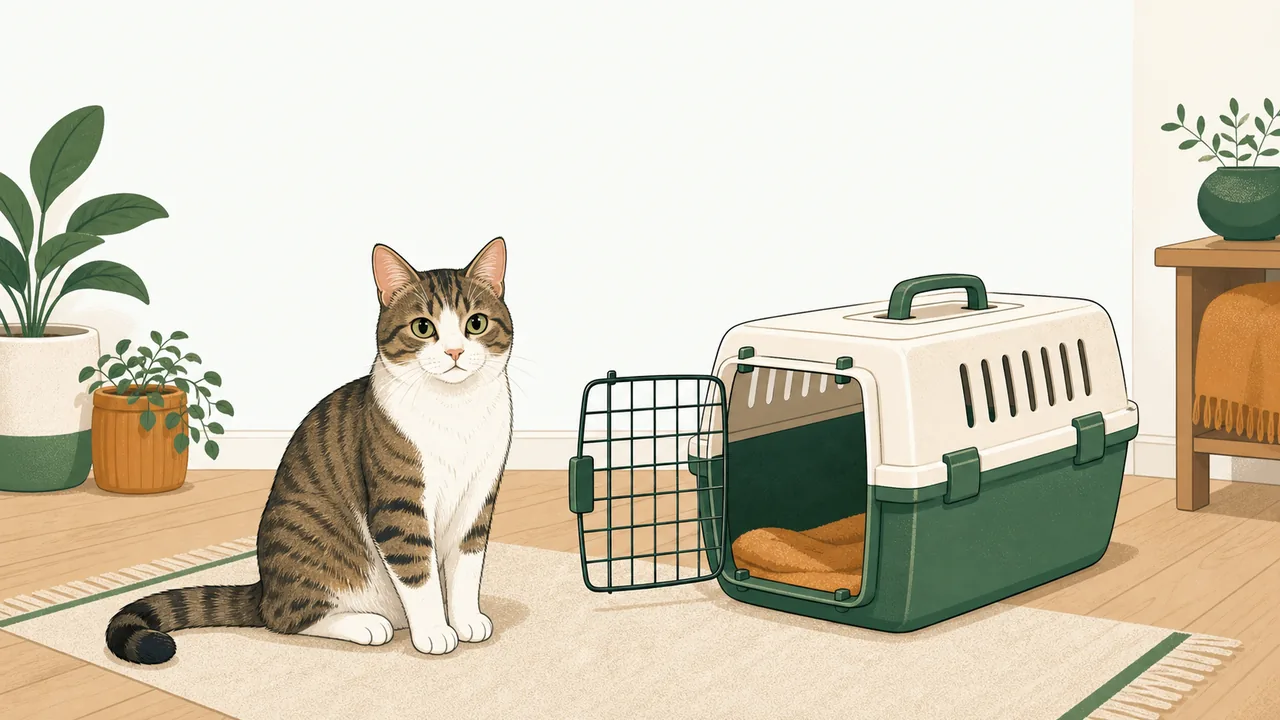
The carrier you want is the one that makes the bad day — the vet visit, the car ride — go smoothly, and that comes down to a few design features, not the price or the print on the side. Here is what actually decides whether a carrier works, and when the basic one beats the expensive one. This is general setup guidance, not veterinary advice; a cat who is extremely fearful or aggressive at the vet is a conversation for your veterinary team or a behavior professional.
Start with how it opens, not how it looks
The single most useful feature, and the one buyers overlook most, is a carrier that opens from both the top and the front, with a top that comes off entirely. Veterinary handling guidance from the AAFP and ISFM and the Fear Free approach all point the same way: a frightened cat does best when it can stay in the bottom half of its own carrier during an exam, instead of being pulled out through a small front door. A removable top lets the veterinarian lift the lid and work with a cat that never has to be tipped onto a cold table. If you buy for one feature, buy for this one.
That is also why hard-sided carriers tend to beat soft ones for the trips that matter. A soft, collapsible carrier folds under pressure, which makes it genuinely hard to get a scared cat out without a struggle, and it offers little structure if it shifts in a car. A hard carrier with a removable top and a tray bottom is sturdier, more secure, and far easier to clean when a stressed cat has an accident on the way — which they do.
The criteria that actually matter
Once you have settled on a hard carrier that opens top and front, the rest of the decision is short:
- Size: snug, not cavernous. Your cat should be able to stand up, turn around, and lie down — and not much more. People assume bigger is kinder, but a cat feels safer in a contained space, and a half-empty carrier lets the cat slide around in the car. Measure your cat and buy close to that — the same measure-don’t-guess logic behind sizing a dog crate.
- Secure latches and solid ventilation. Latches should be ones a determined cat cannot nose open, and there should be airflow on more than one side. This is where bargain carriers cut corners.
- A removable tray or bottom. It is the difference between a two-minute rinse and a miserable cleanup, and it decides whether the carrier stays usable for years.
- Something you can secure in the car. A carrier that can be routed through a seat belt or braced so it does not slide off the seat is doing double duty as a restraint. If crash protection is a real concern for you, note that the Center for Pet Safety crash-tests and certifies some carriers — the Diggs Passenger Carrier is one on its certified list — though for most indoor-to-vet trips a well-secured hard carrier is the practical standard.
When to skip the upgrade
You do not need the designer bag, the clear “bubble” backpack, or the airline-styled splurge for ordinary vet runs. The backpack and bubble styles in particular tend to be bought for how they look to people; ventilation and the awkwardness of getting a cat in and out make them a poor fit for the stressful trips a carrier exists for. A plain, sturdy hard carrier that opens from the top — often the cheapest serious option in the store — outperforms almost all of them where it counts. The carrier is not the part of this that needs to be expensive.
The one upgrade worth considering is crash-test certification, and only if you drive your cat regularly rather than a couple of times a year. For the twice-a-year vet visitor, a secured basic hard carrier is enough.
The 30-second carrier check
Does the top come off completely? Can your cat stand, turn, and lie down without sliding around? Do the latches hold against a determined paw? Can you belt or brace it in the car? Four yeses and you have the right carrier, whatever it cost.
The carrier only works if your cat will get in it
The best carrier on the planet fails if it only appears on vet day, because by then it means “something bad is about to happen.” The fix is a setup habit, not a purchase: leave the carrier out in your home year-round as ordinary furniture, with the door open and a soft pad inside, and feed your cat in or near it so it becomes a neutral, even pleasant, object. Cats that see the carrier every day stop fighting it. This is the cheapest and most effective thing in this entire guide, and it costs nothing.
So the short of it: buy a hard carrier that opens top and front with a removable lid, size it snugly, make sure you can secure it in the car, and then leave it out so your cat stops dreading it. If you also want to lock down car safety for the drive itself — where the cat rides, how the carrier is restrained — that is covered in our guide to securing a pet in the car. And if your cat’s fear of the carrier or the vet is severe, that part is worth raising with your veterinarian.
Review basis. This is a research-based buying guide drawing on AAFP/ISFM feline-friendly handling guidance, the Fear Free approach to carriers, Center for Pet Safety certification, and AVMA travel guidance. PawSetup did not hands-on test products or invent owner reviews, uses no affiliate links, names the Diggs Passenger Carrier only because it appears on the public CPS Certified list, and offers general setup information — not veterinary advice for your individual cat.