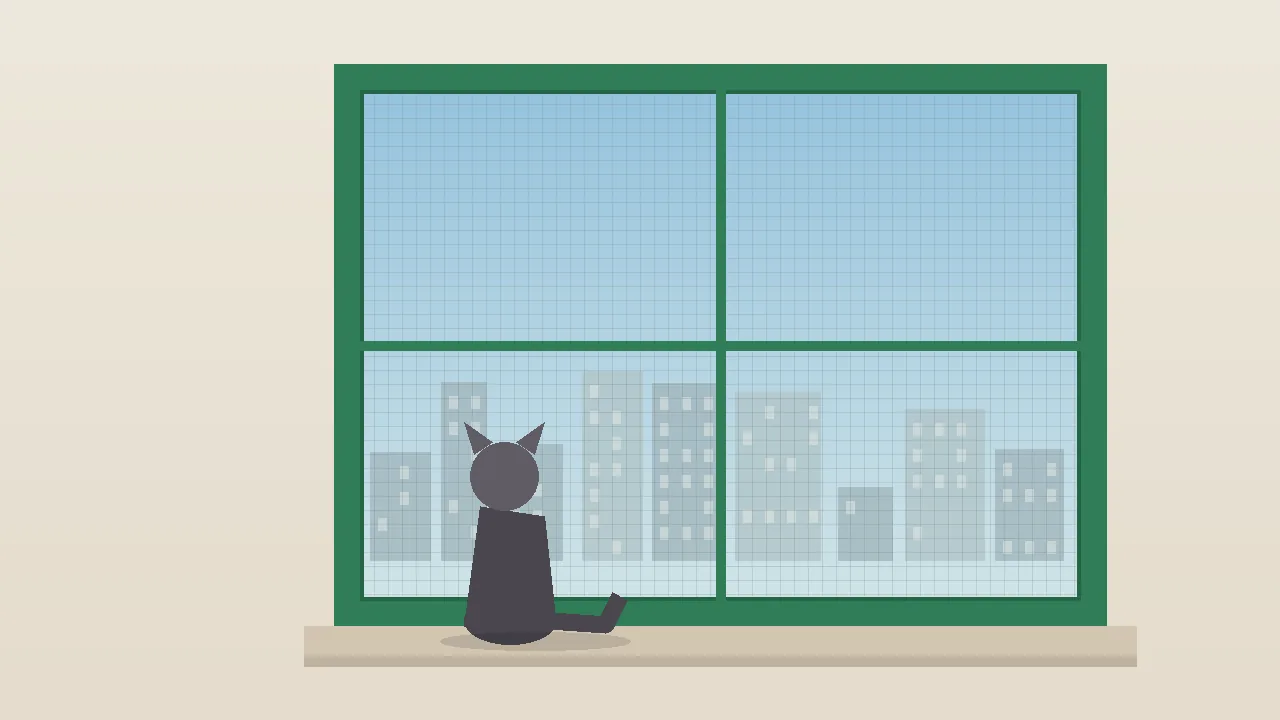
A cat at an open apartment window looks like the most peaceful thing in the world — right up until a bird crosses the view. Vets have a name for what can happen next: high-rise syndrome, the set of injuries a cat sustains in a fall from a window, balcony, or fire escape. It is common enough that, as the ASPCA reports, “during the warmer months, ASPCA veterinarians see on average three to five cases per week.” The reassuring part, in the words of the ASPCA’s Dr. Louise Murray, is that it is “100 percent preventable.” The fix is mostly one thing done properly: a snug, sturdy screen on every window your cat can reach. Here is what to check, and the mistake that undoes it.
What high-rise syndrome actually is
High-rise syndrome is a veterinary term — coined by New York City vets back in the 1980s, per PetMD — for the injuries cats take when they fall from a height. The ASPCA lists what that can mean: “shattered jaws, punctured lungs, broken limbs and pelvises—even death.” PetMD’s vet-reviewed rundown is similar: fractured limbs, facial trauma, internal bleeding, and chest trauma.
The part that surprises owners is how it happens. Cats are not throwing themselves off ledges. As the ASPCA explains, a cat “focuses intensely on something nearby, such as a bird or other animal, which can be distracting enough for them to lose their balance,” and once they slip, “it can be difficult for them to find a secure grip on window ledges and brick surfaces.” There is also a popular belief worth dropping here: that cats always land on their feet. Short falls are in some ways the more dangerous ones, because, as the ASPCA notes, “falling shorter distances do not give them enough time to adjust their body posture to land correctly.” Even a one- or two-story window is not a safe height.
The mistake: a childproof window guard is not a cat guard
This is the single most important line in the guide, because it is the trap. A window guard sold to keep a toddler from falling is not built for a cat. The ASPCA is blunt about it: “Do not rely on childproof window guards to protect your pets! Cats can slip through them.” The bars are spaced for a child’s body, and a cat will fit through a gap that looks far too small.
What does work is a screen — but only if it is the right kind and properly fitted. The ASPCA’s instruction is to “install snug and sturdy screens in all your windows,” and, crucially, “if you have adjustable screens, make sure that they are tightly wedged into window frames.” That last detail is where home setups fail: a flimsy expandable screen that a determined cat can pop loose with its weight is not protection. The screen has to hold against a cat pushing on it, and it has to fit the whole opening with no gap to slip through.
The small-apartment angle: more open windows, fewer barriers
Apartment living stacks the odds in a particular way. Summer is when windows come open, which is exactly why the ASPCA’s caseload climbs in warm months. Floor-to-ceiling windows, balconies, and fire escapes — common in city apartments — are all listed by PetMD among the places cats fall from. And an indoor cat that has never been outside, the ASPCA points out, “may not realize how high up they are,” so the height itself offers no instinctive caution.
A few setup choices follow from that. Screen every window your cat can get to, not just the ones you usually open. If a window does not have a sound screen, the safer default is to keep it shut, or open it only as far as a sound screen covers. For a cat that clearly wants the outdoors, PetMD points to a secure enclosure — a “catio” or escape-proof playpen — as the way to give that safely rather than an open sash. Window-proofing is also part of the wider hazard pass worth doing in a small space; the same room-by-room thinking shows up in our guide on setting up a room for a new kitten, and a window left ajar belongs on the same checklist as cords and cleaners.
If your cat does fall, it is an emergency — not a wait-and-see
Because of the “cats are fine, they always land on their feet” myth, falls get watched instead of treated, and that is the dangerous instinct. A cat can have internal bleeding or chest trauma, in PetMD’s list, with little to show on the outside. Treat any fall from a window or balcony as a reason to go to a veterinarian or emergency clinic right away, even if the cat seems to walk away from it. The encouraging counterpart to that urgency is the ASPCA’s figure: “when high-rise victims receive immediate and proper medical attention, they have a 90% survival rate.” The number is good because the care is prompt — not because the fall was harmless.
The short version
Cat-proofing an apartment window comes down to a few honest steps: put a snug, sturdy screen on every window your cat can reach and wedge adjustable ones tight; do not trust a childproof window guard, because cats slip through them; keep unscreened windows shut or barely open; give an outdoor-curious cat a secure catio rather than an open sash; and if a cat ever falls, go to a vet immediately regardless of how it looks. It is, as the ASPCA says, a fully preventable problem — which is the best reason to spend an afternoon on it before the windows are open all season. For more of the indoor setup, our guide to essential oil diffusers around cats covers another common apartment-air safety question, and the rest of the pet home setup guides build out from here.
Review basis. This is a research-based pet-setup guide drawing on the ASPCA’s high-rise syndrome guidance and press materials, and on vet-reviewed PetMD. PawSetup did not test products, did not collect owner reviews for this guide, uses no affiliate links, and offers general information — not veterinary advice for your individual cat. A fall from any height is a reason to see a veterinarian right away.